

Why timely fire extinguisher servicing and replacement matter in Singapore
Fire extinguishers are simple, low-cost safety devices that protect lives, property and business continuity — but only when they are maintained and replaced on time. Neglecting routine fire extinguisher servicing or delaying fire extinguisher replacement can lead to failed inspections, voided insurance claims, and higher risk during an emergency.
This guide explains what fast, compliant servicing and replacement look like, how often to act, costs to expect, and practical tips for households and businesses across Singapore.
Singapore regulations and compliance essentials
That includes regular visual checks, annual servicing by certified technicians, and appropriate disposal when an extinguisher is beyond economic repair.
For practical tips on upkeep of dry powder units, see these dry powder fire extinguisher servicing tips: dry powder fire extinguisher servicing tips.
How often you need servicing vs replacement
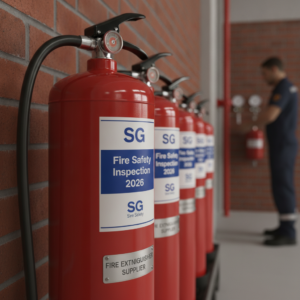
- Monthly visual checks: A designated staff member should inspect extinguisher pressure gauges, seals, tamper indicators, obvious damage, corrosion and accessibility.
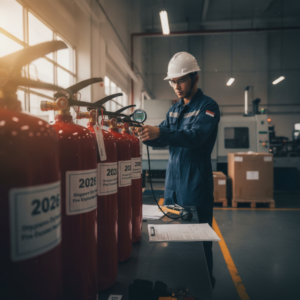
- Annual servicing: Most portable extinguishers require an annual full service by a licensed technician. This service involves internal checks, pressure testing where necessary, component replacement (hoses, gauges, nozzles), and recharging.
- Hydrostatic testing and replacement: Certain extinguisher types require hydrostatic testing every few years; if tanks fail testing or are corroded, immediate fire extinguisher replacement is necessary.
For a detailed overview of scheduled inspections and maintenance best practices, consult this resource on fire extinguisher maintenance and safety inspection: fire extinguisher maintenance and safety inspection.
The servicing process: what technicians do
When you book professional fire extinguisher servicing, technicians typically:
- Verify unit location and accessibility
- Check the pressure gauge and external condition
- Open or disassemble the unit (where required) to examine internal components
- Replace defective parts such as O-rings, hoses, valves, or gauges
- Recharge the extinguisher with the correct agent and restore pressure
- Apply new service tags and update logbooks
Fast servicing teams in Singapore usually prioritise businesses with multiple units or critical sites and can often complete same-day servicing for straightforward jobs.
When to replace a fire extinguisher
Replacement is necessary when:
- The cylinder fails hydrostatic testing or shows severe corrosion
- The extinguisher has been discharged and repair/recharge is uneconomical
- The extinguisher is expired (past manufacturer or testing life) or obsolete
- Damage to structural components (valve body, neck, cylinder) compromises safety
If you need a step-by-step portable unit swap, this portable fire extinguisher replacement guide explains selection and disposal: portable fire extinguisher replacement guide.
Choosing the right replacement unit
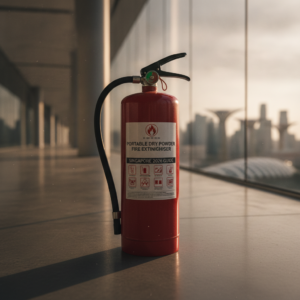
Selection depends on risk type and environment. Common options in Singapore include water, foam, CO2 and dry powder extinguishers. For many commercial kitchens and mixed-use spaces, dry powder units are widely used for their versatility — read more about dry powder choices for Singapore properties here: dry powder fire extinguisher Singapore.
Key selection tips:
- Match extinguisher rating and agent to the fire risks present (A, B, C, electrical, grease)
- Consider size vs portability; a 3–6 kg unit is common for commercial spaces while 1 kg or 2 kg may suit small offices or cars
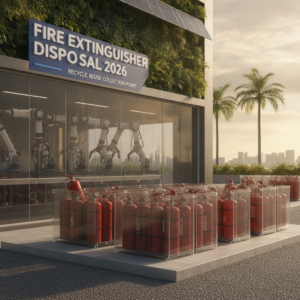
Safe disposal and compliant methods
Discarded extinguishers, especially those containing pressurised gases or chemical agents, must be disposed of safely. Improper disposal can lead to environmental harm and fines.
Cost expectations and budget planning
Costs vary by unit type and service level in Singapore. Typical price ranges (indicative):
- Monthly in-house visual checks: staff time only
- Annual professional servicing: SGD 20–60 per unit for basic services
- Recharge/refill: SGD 30–80 depending on agent and size
- Replacement new unit: SGD 50–300 depending on type and capacity
- Hydrostatic testing: SGD 30–90 per unit
Bulk contracts for offices, malls or industrial sites often secure discounted per-unit rates and priority response for repairs and replacement.
Fast servicing strategies for businesses
If continuity is critical, choose providers that offer:
- Rapid on-site response and same-day servicing for simple faults
- Scheduled contract servicing with digital logs and automatic reminders
- Replacement stock for quick swap-outs to minimise downtime
Companies that adopt proactive servicing plans see fewer emergency failures and better compliance during inspections. A reliable maintenance partner will also help keep electronic records and service tags up to date.
Practical tips for building managers and homeowners
- Keep extinguishers visible and unobstructed — blocked units are effectively useless
- Train staff and household members on proper use and location
- Check tamper seals and pressure gauges monthly; note discrepancies immediately
- Maintain a service log with dates, technician names and certificates
- Replace or upgrade older extinguishers to meet current standards rather than patching repeatedly
For specific servicing tips on dry powder models commonly used in Singapore, refer to this focused guidance: dry powder fire extinguisher servicing tips.
Records, certificates and insurance
Always retain:
- Annual service certificates
- Hydrostatic test records
- Disposal receipts for replaced units
- A clear inventory of extinguisher types, locations and servicing dates
Providers that supply digital service records simplify audits and claims. Consider a service partner who uploads certificates to a cloud portal for instant access.
Common mistakes to avoid
- Relying solely on visual checks and skipping annual servicing
- Using non-certified technicians or uncertified replacement parts
- Storing extinguishers in humid, corrosive environments without proper protection
- Delaying replacement because of perceived cost savings — failure during an incident is far costlier
Why fast, certified servicing pays off
A small investment in maintenance prevents major losses and preserves business operations.
Getting started: a practical checklist
- Schedule monthly visual checks and log them
- Book annual servicing with a certified provider
- Identify units due for hydrostatic testing or replacement
- Keep replacement options and disposal pathways ready
- Maintain digital records and ensure staff training
For a complete action plan on maintenance and inspection workflows, see this comprehensive maintenance guide: fire extinguisher maintenance and safety inspection.
By following consistent servicing and replacement practices tailored to Singapore’s regulations, property owners and facilities managers can keep people safe, operations compliant, and response readiness high. Fast servicing, certified technicians and timely fire extinguisher replacement form the foundation of an effective fire safety program.


No comment yet, add your voice below!