

Introduction
Singapore’s approach to fire safety is among the most rigorous in the region. This guide explains practical servicing requirements for 2025, highlights recordkeeping and inspection best practices, and offers actionable tips to choose competent service providers.
Why fire extinguisher servicing matters in 2025
Portable fire extinguishers are a frontline defence for small fires. However, an extinguisher that looks fine on the outside can fail if not properly maintained. In 2025 there’s increasing emphasis on documented maintenance, digital records and verified competency of service providers — trends that help inspectors confirm compliance faster during audits.
Key expectations for fire extinguisher servicing
While the Fire Code and specific circulars outline rules, the practical expectations you should observe in 2025 are:
- Monthly visual checks by the occupier or appointed staff to confirm units are in place, unobstructed and show no visible damage.
- Annual servicing by qualified technicians to inspect, clean, recharge or replace components as needed.
- Periodic pressure and integrity testing (hydrostatic or equivalent) as per manufacturer recommendations and extinguisher type.
What a proper service should include
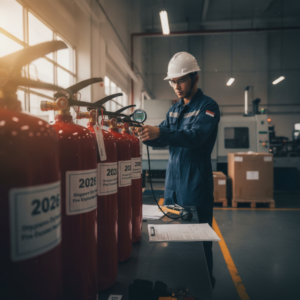
A comprehensive service visit from an accredited technician typically covers:
- Visual inspection of hose/nozzle, pressure gauge, and body for corrosion, dents or leakage.
- Verification of service tag, expiry date and previous maintenance history.
- Functional checks and recharging or replacement of the extinguishing agent when necessary.
- Replacement of damaged components (hoses, seals, pins) and correction of mounting or accessibility issues.
- Labelling and tagging with service date, next service due, and technician identification.
- Written report or digital certificate that records work done, parts replaced and recommended actions.
For guidance on standard procedures and maintenance considerations, see a focused resource on portable fire extinguisher maintenance.
Servicing intervals and testing — what to expect
Exact intervals depend on extinguisher type and manufacturer instructions, but common practice is:
- Monthly: simple visual checks by on-site staff.
- Annually: detailed servicing by a qualified technician.
- Periodic pressure/hydrostatic testing: intervals vary by agent and design (check manufacturer data).
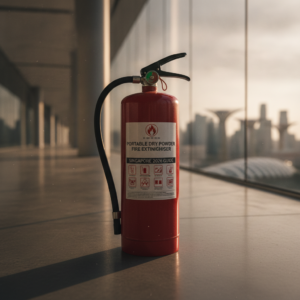
Always follow the extinguisher manufacturer’s guidance and record any deviations. If you’re considering replacement or upgrading to newer agents, the best dry powder fire extinguisher guide can help identify products that meet local operational needs.
Choosing the right service provider in Singapore
When vetting vendors, check for:
- Proven experience with commercial or industrial properties in Singapore.
- Clear documentation practices and digital reporting capability (QR codes, cloud logs).
- Transparent pricing for routine servicing, recharging and parts replacement.
- Insurance and workmanship guarantees.
Documentation and audit readiness
To make audits smooth:
- Keep a central log (digital preferred) of all monthly checks and annual servicing.
- Maintain original service reports, certificates and test results for each extinguisher.
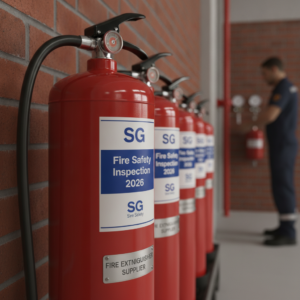
- Tag extinguishers with visible service dates and next-due dates; QR tags are becoming standard.
- Ensure the person responsible for fire safety can produce documentation within minutes on request.
For a full view of inspection requirements and protection systems, refer to this overview: 2025 Singapore fire safety inspection & protection systems.
Common compliance pitfalls and how to avoid them
- Digitise logs and back them up.
- Unqualified servicing: Using untrained personnel can lead to incorrect servicing. Always contract certified technicians.
- Missed recharges or tests: Missing scheduled recharges or hydrostatic tests reduces extinguisher reliability. Use calendar reminders and vendor maintenance plans.
- Accessibility issues: Extinguishers blocked by equipment or stored in inaccessible locations are often penalised. Ensure conspicuous and unobstructed placement.
New trends in 2025: digitisation and smarter servicing
The fire protection industry in Singapore is adopting digital tools to improve compliance and performance:
- QR-coded maintenance tags that link to the extinguisher’s service history.
- Cloud-based maintenance platforms for real-time tracking and automated reminders.
- Predictive maintenance using usage and environmental data (especially in high-risk industrial sites).
- Eco-friendlier extinguishing agents and low-global-warming-potential (GWP) options for facilities aiming for sustainability certifications.
Cost considerations and budgeting for servicing
Budgeting for proper servicing avoids costly penalties and equipment failures. Typical costs to plan for:
- Annual servicing fees per unit (depends on extinguisher size and agent).
- Replacement parts and recharging costs.
- Periodic pressure testing fees.
- Possible replacement of expired units or upgrades to newer types.
Many service providers offer maintenance contracts that include scheduled visits and digital records — a wise choice for medium and large properties.
Responsibilities: owners, occupiers and service providers
- Owners/occupiers: Ensure extinguishers are present, accessible, checked monthly and serviced annually. Maintain documentation and act on technician recommendations.
- Service providers: Perform competent servicing, provide clear documentation, and advise on repairs or replacements.
Clear assignment of these responsibilities prevents gaps and demonstrates proactive compliance during inspections.
Preparing for an inspection: practical steps
- Consolidate all maintenance records into one accessible file or cloud folder.
- Verify that each extinguisher has a visible service tag with the last service date and next-due date.
- Check physical condition and placement of extinguishers; remedy blocked or damaged units immediately.
- Ensure that monthly check logs are complete and signed by the responsible staff.
- Have contact details for your service provider and recent service reports on hand for the inspector.
For a deeper checklist and documentation guide, see this inspection and protection systems resource: 2025 Singapore fire safety inspection & protection systems.
Sustainability and future-proofing your fire safety program
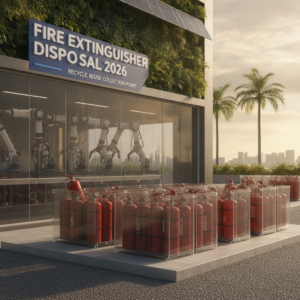
As Singapore pushes toward greener operations, consider extinguishers and servicing practices that reduce environmental impact and lifecycle costs. Options include agents with lower GWP, responsible disposal of used agents, and providers who operate with transparent environmental policies.
Upgrading to digital recordkeeping also reduces paper waste and makes audits faster and greener.
Closing summary
Embrace digitised maintenance records, stay mindful of manufacturer testing intervals, and ensure that staff understand their monthly check responsibilities.


No comment yet, add your voice below!