

Why portable fire extinguisher maintenance matters in Singapore
Portable fire extinguishers are the first line of defence in many Singapore homes, offices, F&B outlets and industrial sites.
It covers basic daily checks, recommended service intervals, type-specific tips, record-keeping best practices and recent technology trends making maintenance easier.
Quick daily and monthly checks you can do yourself
Routine visual checks are inexpensive and effective. Make them part of site walkthroughs or building manager rounds:
- Confirm the extinguisher is in its designated location, unobstructed and mounted correctly.
- Check the pressure gauge: needle should be in the green zone for gauge-equipped units. Record any out-of-range readings.
- Ensure the safety pin and tamper seal are intact.
- Inspect the cylinder body, hose and nozzle for dents, corrosion, cracks or blockages.
- Look for clear labelling and legible instructions. Replace or relabel if faded.
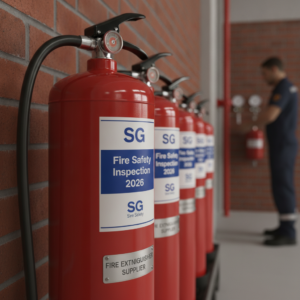
- Verify service tag and last-serviced date. If approaching one year or if tag is missing, arrange professional servicing.
These checks form the foundation of practical fire extinguisher maintenance and help catch issues early.
Scheduled servicing: what to expect and when to book
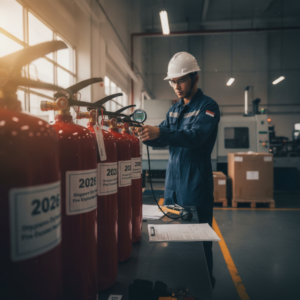
Beyond visual checks, scheduled servicing by a qualified technician is required to maintain effectiveness and legal compliance. A typical schedule used across Singapore is:
- Monthly: Visual checks (performed in-house).
Type-specific maintenance tips
Different extinguisher agents require different attention:
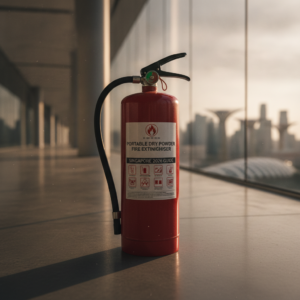
- Dry powder (ABC) extinguishers: Common in Singapore for general hazards. Check for caking or settling; gently invert and shake during professional servicing if permitted. Refer to the best dry powder fire extinguisher guide for details on handling and selection: best dry powder fire extinguisher guide.
- CO2 extinguishers: No pressure gauge in many models—weight checks and professional inspections are key. CO2 cylinders typically require strict hydrostatic testing intervals.
- Water and foam extinguishers: Watch for corrosion around seams and ensure the valve and siphon tubes are intact.
- Wet chemical (kitchens): Ensure seals are intact and the nozzle is free of residue; replacement or recharge after use is critical for kitchen safety.
If your building uses portable fire extinguisher types you’re uncertain about, find maintenance guidance specific to your model and arrange servicing accordingly via resources such as portable fire extinguisher maintenance.
Placement, storage and signage — reducing false activations and damage
Correct mounting and placement protect extinguishers from damage and ensure they’re accessible during an incident:
- Mount at visible, reachable heights and away from direct sunlight and heat sources.
- In humid or coastal areas, place units away from spray, plumbing leaks and direct sea spray when possible.
- Use corrosion-resistant brackets in coastal facilities.
- Ensure clear signage and unobstructed access paths; maintain floor markings in warehouses or large retail areas.
- Rotate portable units from high-risk, high-traffic zones if they’re susceptible to accidental knocks.
Documentation, tagging and digital record-keeping
Good records prove compliance and speed up audits. Recommended practices:
- Keep a physical service log on each extinguisher and a central digital log (spreadsheet or maintenance software).
- Record monthly visual check dates, staff who performed them, service dates, technician name/company and details of work completed.
- Attach tamper-evident service tags showing the next due date.
- Adopt QR tags and cloud logs where feasible: scanning a QR code on the unit can show maintenance history immediately — a growing trend in 2026 facility management.
For professional inspection cycles and protection systems info, see relevant inspection guidance: 2025 Singapore fire safety inspection protection systems.
Choosing a servicing provider and understanding costs
When vetting providers:
- Ask about experience with your extinguisher types and on-site test procedures.
- Request clear quotes that separate routine servicing, hydrostatic tests and recharge costs.
- Check turnaround times — many businesses now prefer on-demand servicing contracts and remote scheduling via mobile apps.
Costs vary by type and quantity of extinguishers. Annual service per unit commonly ranges from a modest fee for visual and valve checks to higher for full internal inspection, refill, or hydrostatic testing.
Recharge, repair and end-of-life handling
After use, or when a unit fails inspection, follow correct procedures:
- Recharge after any discharge by a licensed refill centre.
- Replace damaged hoses, nozzles and head assemblies only with approved parts.
- For cylinders that fail hydrostatic test, do not attempt DIY repair — arrange disposal and replacement through a licensed service.
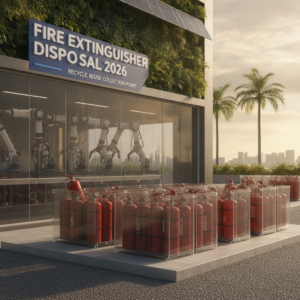
- Dispose of extinguishers through vendors who handle hazardous waste; do not place pressurised cylinders in general waste.
If uncertain whether a unit is beyond repair, document the inspection and get a second opinion from another licensed provider.
Training staff and building occupants
An extinguisher is effective only when people know how to use it. Regular training reduces misuse and accidental damage:
- Provide basic PASS (Pull, Aim, Squeeze, Sweep) training during staff induction and annual refresher courses.
- Run live demonstrations using training units or controlled demonstrations by professionals.
- Include extinguisher location and handover procedures in emergency response plans.
Emerging trends in 2026 that make maintenance smarter
Recent trends in Singapore’s facility management space are simplifying fire extinguisher maintenance:
- Smart tags and QR-based logs let technicians update service history instantly.
- IoT-enabled cabinets and tamper sensors report missing or discharged units to central maintenance dashboards.
- Mobile apps streamline on-demand servicing, e-signatures and invoice management.
- Remote audits and photo-based inspections are accepted for preliminary checks, but in-person servicing remains necessary for internal inspections and pressure testing.
These innovations help busy building managers stay audit-ready and reduce time spent chasing paperwork.
Practical checklist for managers (printable)
- Monthly: Visual checks, pressure, pin and seal, location and signage.
- Quarterly: Confirm tags, review digital logs, check corrosion-prone units.
- After discharge: Immediate recharge and tagging; confirm service before returning to active use.
Final words
Consistent portable fire extinguisher maintenance keeps people, property and operations safer while meeting Singapore’s regulatory expectations. Combining simple monthly checks, documented annual servicing by licensed technicians and modern digital records protects your assets and reduces downtime. For model-specific guidance and purchasing options, consult local resources and licensed vendors to keep your extinguishers fully operational and compliant.
Regular maintenance, clear records and trained staff are the simplest, most cost-effective ways to ensure extinguishers do their job when needed.


No comment yet, add your voice below!