

The state of fire safety in Singapore for 2025
Singapore’s approach to fire safety continues to evolve. Building owners, facilities managers and SMEs are expected to meet stricter compliance, faster inspection cycles and better emergency preparedness.
Choosing the right partner is no longer just about price. It’s about regulatory compliance, traceable maintenance, and equipment suited to your risk profile. Whether you manage an HDB block, a commercial kitchen, or an industrial site, partnering with a reputable singapore fire safety company ensures both safety and legal peace of mind.
What defines a trusted fire extinguisher supplier
A credible supplier in Singapore should meet these criteria:
- Full-service offering: Sales, placement, installation, regular servicing and certification.
- Transparent records: Digitised inspection logs, serial-number tracking, and visible expiry dates or pressure tests.
- Trained technicians: Certified personnel who can advise on extinguisher types and perform safe, documented maintenance.
- Customer education: On-site or virtual training for staff and clear signage to guide emergency responders and occupants.
A practical first step for many organisations is to contact a local fire equipment provider to discuss site-specific risks and inspection cadences. For a broad provider profile, a typical option is a reliable fire extinguisher supplier that offers both product supply and recurring services.
Types of extinguishers and where they fit
Different hazards require different extinguishers. A good supplier will recommend the correct class and size based on your premises and operational risks:
- Water (Class A): For ordinary combustibles such as wood and paper; not for electrical fires.
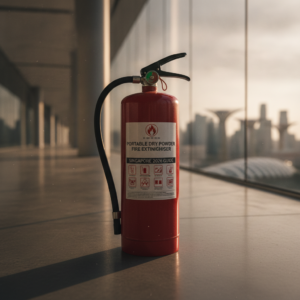
- Dry Chemical (ABC / BC): Versatile and common for mixed-use buildings and general hazards.
- CO2: Ideal for electrical fires and sensitive equipment; leaves no residue.
- Foam: Effective on flammable liquids and large surface-area spills.
- Wet Chemical: Specifically for deep-fat fryers and kitchen fires in commercial kitchens.
If you’re unsure which type fits your needs, consult resources or suppliers that explain suitability and limitations. For example, guidance on locations and availability of dry powder models can be found at where to buy dry powder fire extinguisher.
Compliance, inspections and documentation
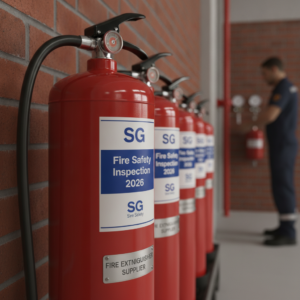
Singapore’s regulatory framework requires regular inspections and timely maintenance. Certified service providers should issue documented reports and test stamps after each service. Modern best practice increasingly includes digital logs and QR codes on units for instant access to inspection history.
Key inspection milestones:
- Monthly visual checks (by responsible person on site)
- Annual professional service (pressure checks, seals, recharges)
If you need a clear guide on when to maintain or replace fire extinguishers in Singapore, reputable suppliers will provide timelines and replacement cost comparisons.
Servicing and maintenance best practices in 2025
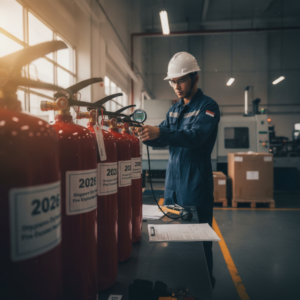
Servicing goes beyond checking pressure gauges. A forward-thinking singapore fire safety company will provide:
- Detailed inspection reports with photos and serial numbers
- Predictive scheduling (alerts when units are near service or expiry)
- Component-level checks (nozzles, hoses, gauges, seals)
- Full recharge and labeling after discharge
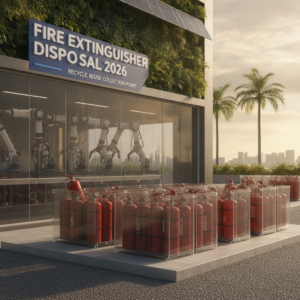
- Safe disposal of expired units in line with environmental rules
Training, drills and staff preparedness
Equipment is only effective when people know how to use it. Suppliers often offer practical fire extinguisher training and scenario-based drills:
- Hands-on extinguisher usage training (PASS technique)
- Evacuation and alarm response coordination
- Kitchen fire response for F&B operators
- Tailored sessions for special risks (laboratories, workshops)
Training records should be retained alongside inspection logs so that compliance and readiness are demonstrable during audits.
New trends affecting fire extinguisher procurement and service
- Digital record-keeping: QR codes and cloud-based inspection logs are becoming standard, improving audit readiness.
- Predictive maintenance: IoT sensors on some equipment can flag pressure loss or tampering in real time.
- Environmentally safer agents: Alternatives to older, harsh extinguishing agents are being adopted where appropriate.
- Integrated safety packages: Suppliers bundle extinguishers with alarms, signage and staff training to provide single-source responsibility.
A supplier who invests in these trends demonstrates commitment to modern fire safety needs and easier regulatory compliance.
Choosing a singapore fire safety company: questions to ask
When you vet suppliers, ask these practical questions:
- Can you provide digital copies of past inspection reports and certificates?
- Do you offer site surveys and customised extinguisher placement plans?
- What is your turnaround for emergency call-outs and recharge services?
- How do you handle expired or damaged units (recycle, dispose, replace)?
Additionally, check references and recent client testimonials.
Cost considerations and value analysis
Price is important, but focus on total cost of ownership. Consider:
- Upfront equipment cost vs expected lifespan
- Annual service and inspection fees
- Replacement parts and recharge costs
- Potential liability costs from non-compliance
- Value of bundled services (training, signage, digital records)
A supplier who helps you plan lifecycle replacement, offers maintenance contracts and provides transparent invoicing often delivers better long-term value than the cheapest one-off purchase.
Real-world application: kitchens, offices and industrial sites
- Commercial kitchens: Require wet chemical extinguishers, regular hood and duct cleaning, and staff trained specifically for grease fires. Ensure providers can advise on kitchen-specific placement and servicing.
- Office buildings: ABC or CO2 units near electrical closets and communal areas, plus monthly visual checks and annual servicing.
- Industrial premises: Higher-capacity units, specialised agents for flammable liquids, and frequent inspections due to harsher conditions.
Operators often pair extinguisher services with a broader safety partner to manage multiple systems efficiently.
guidance and public education
Using official guidance ensures your extinguishers are not only effective but deployed and serviced according to national expectations.
How to move forward with procurement and service
- Conduct a site risk assessment with a certified provider.
- Choose extinguisher types and placement based on identified hazards.
- Contract a supplier for regular servicing and digital reporting.
- Schedule staff training and maintain visible signage.
When evaluating vendors, the ability to combine supply, inspection and training in one package reduces administrative friction and improves compliance. For an overview of supplier offerings and maintenance strategies, many organisations start by exploring suppliers like a leading fire extinguisher supplier who publishes practical resources.
Conclusion
Fire safety in Singapore in 2025 demands more than a one-time purchase. It requires an integrated approach: the right type of extinguisher, consistent servicing, thorough documentation and staff preparedness. Partnering with a reputable singapore fire safety company ensures compliance, operational readiness and clearer budgeting for long-term protection. Prioritise suppliers who offer transparent records, certified technicians and modern service practices so your premises stay protected and audit-ready.
For further operational detail and guidelines on procurement, inspections and replacement timelines, consult resources such as where to buy dry powder fire extinguisher, maintain or replace fire extinguishers in Singapore, and the government-aligned fire safety inspection guidance.


No comment yet, add your voice below!