

Quick overview
This guide explains what a dry powder fire extinguisher does, which sizes suit different uses, where to buy one locally, and practical tips on installation, servicing and inspection.
Why choose a dry powder fire extinguisher?
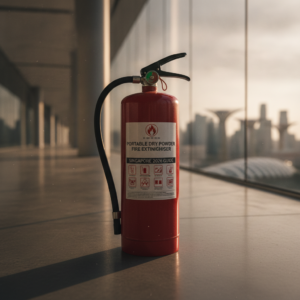
A dry powder fire extinguisher (often labelled ABC powder) is versatile. The fine, sodium bicarbonate- or monoammonium phosphate-based powder interrupts the chemical reaction of a fire and can be used on:
- Class A fires (combustible solids like wood and paper)
- Class B fires (flammable liquids like petrol and oils)
- Class C fires (energised electrical equipment)
Benefits:
- Multipurpose protection for mixed-risk environments such as kitchens, workshops and general offices.
- Relatively low cost per kg compared with some other agent types.
- Effective at quickly knocking down small to medium fires when used correctly.
Limitations to bear in mind:
- Powder can cause significant residue and cleanup after discharge; it may damage sensitive equipment.
- Not ideal for confined indoor areas where powder inhalation or fine particulate contamination is a concern.
- After discharge, a dry powder extinguisher must be refilled or replaced and often needs equipment-specific cleaning.
Common sizes and where they fit
Dry powder fire extinguishers come in a few standard sizes in Singapore. Choose the size based on the space and the risk level:
- 1 kg: Compact, handy for cars or small personal kits but short discharge time—best for vehicle fires.
- 2 kg: Suitable for small kitchens or domestic use where quick knockdown of a small blaze is needed.
- 4 kg–4.5 kg: A common choice for HDB kitchens, small shops and offices—good balance of capacity and weight.
- 6 kg and above: Often used in commercial spaces or higher-risk areas where longer discharge and more agent is required.
Tip: For most households in Singapore, a 2 kg or 4.5 kg ABC dry powder extinguisher is a practical starting point. For businesses, a fire risk assessment will determine the correct number and capacity.
compliance and servicing requirements
Key points to remember:
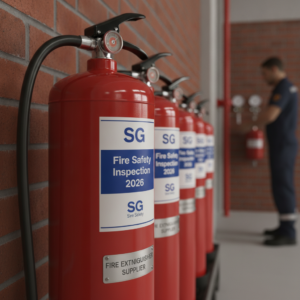
- Monthly visual checks by the occupier: ensure pressure gauge is in range, nozzle clear, and unit accessible.
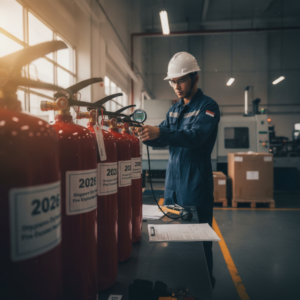
- Annual servicing by an authorised or trained technician to ensure operational readiness.
- Hydrostatic pressure testing or replacement may be required at specified intervals depending on the unit type and manufacturer instructions.
For detailed guidance on legal and practical inspection steps, see this resource on fire safety inspection Singapore 2025.
Where to buy in Singapore — trusted channels
1) Authorised safety equipment suppliers and dealers
Look for companies that supply labelled ABC dry powder extinguishers, offer installation, and provide an annual servicing plan.
2) Specialist fire safety companies
Specialist firms will advise on siting, numbers and servicing frequency, and often provide a service contract. If you need both supply and maintenance, search for vendors that offer full lifecycle support including servicing and replacement. A useful resource on servicing and replacement options is fire extinguisher servicing & replacement Singapore 2025.
3) Hardware stores and major electrical retailers
Many hardware retailers stock small dry powder units and can be convenient for basic household purchases. For business or insurance-compliant purchases, confirm that the unit carries the necessary approvals and that the retailer can recommend servicing options.
4) Online marketplaces and direct manufacturer sales
Online channels offer price comparison and convenience, but verify seller reputation, product certification and shipping handling. Ensure the product is appropriate for Singapore conditions and that you can arrange certified servicing locally after purchase.
5) Fleet and vehicle-focused suppliers
If you’re buying for cars, delivery vans or marine applications, consider suppliers specialising in automotive fire safety; 1 kg and 2 kg dry powder units are common here.
Where to get help with deciding and maintaining units
-
If you’re unsure whether to repair, recharge or replace an extinguisher, consult a professional who can inspect the unit to determine viability. For guidance, see this helpful article on whether to maintain or replace fire extinguishers in Singapore 2025.
-
For owners and facilities managers, a simple, actionable checklist helps keep portable units in order; review a portable fire extinguisher checklist Singapore 2025 to set up monthly and annual routines.
Pricing expectations in 2025
Approximate price ranges (indicative, subject to supplier and brand):
- 1 kg dry powder: SGD 20–40
- 2 kg dry powder: SGD 40–80
- 4 kg–4.5 kg dry powder: SGD 80–160
- 6 kg+: SGD 120–300
Other costs to budget for:
- Installation or mounting brackets
- Annual servicing (~SGD 20–60 per unit depending on contractor and bundled plans)
- Refill or replacement after discharge
- Hydrostatic testing fees when required
Buying a slightly higher-quality, certified unit and a servicing plan often saves money and stress long-term.
Buying checklist — quick practical tips
- Confirm the agent type (specify dry powder / ABC powder) and expiry date.
- Verify pressure gauge status and tamper seal are intact at purchase.
- Ask about annual servicing plans and whether the supplier provides a maintenance tag/log.
- Get the recommended size for your space—avoid underpowered units for commercial risks.
- Ask if the supplier provides training or demonstration on safe operation.
Use the practical items in the portable fire extinguisher checklist Singapore 2025 when you evaluate any purchase.
Maintenance, servicing and end-of-life
- Monthly occupant checks: gauge, seals, nozzle and accessibility.
- Annual servicing: performed by trained technicians; records should be kept on-site.
- After discharge: extinguishers must be refilled/recharged and re-tagged by a professional.
- Hydrostatic testing: some cylinders require periodic pressure testing—follow manufacturer and service provider guidance.
- If a unit fails inspection or is extensively corroded or damaged, replacement is safer and often mandatory.
A practical guide to common servicing and replacement scenarios is available at fire extinguisher servicing & replacement Singapore 2025.
Trends in 2025 — what’s changing
- Digital maintenance records and QR-code tagging: More suppliers now attach QR codes so building managers can instantly view the last service date and unit history.
- Remote inspection workflows: Service companies are using mobile checklists and cloud logs to schedule routine maintenance and generate reminders.
- Emphasis on training and drills: Organisations increasingly bundle short hands-on extinguisher training with sales and servicing.
- Eco-awareness: While dry powder remains common for multi-class fires, buyers are more informed about cleanup and equipment sensitivity; alternatives are considered for server rooms and laboratories.
Final advice for buyers in Singapore
- Regular maintenance is part of legal and safety best practice.
- Buy from authorised suppliers who provide installation, training and an annual service plan.
- Match extinguisher size and agent to the specific risk (kitchen, office, vehicle, workshop).
- Keep records—inspection tags, service receipts and any hydrostatic test certificates.
- If uncertain whether to repair or replace, consult a professional. A decision guide is available here: maintain or replace fire extinguishers in Singapore 2025.
Selecting the right dry powder fire extinguisher and maintaining it properly will ensure quick, reliable response when a small fire starts.


No comment yet, add your voice below!