

Why fire extinguisher maintenance matters in Singapore
Singapore’s dense urban environment and strict building regulations make effective fire prevention essential. Portable fire extinguishers are a first line of defence — but only when they’re correctly selected, regularly inspected and professionally maintained.
What the regulations expect (and industry norms)
Routine schedule: what maintenance intervals you should plan for
- Monthly: quick visual checks — gauge reading, seal and pin intact, correct location and signage, no obvious corrosion or damage. These can be carried out by trained in-house staff.
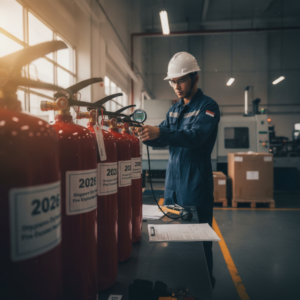
- Annual: professional servicing by a certified technician — full inspection, component servicing, replacement of worn parts and recharge if required.
- Every 5 to 12 years: pressure/hydrostatic testing or major overhaul depending on extinguisher type and manufacturer recommendations.
For guidance on whether to service or replace a unit, local resources explain the decision factors clearly: maintain or replace fire extinguishers.
Daily checks vs professional maintenance — what each covers
Daily or monthly checks (visual) should include:
– Pressure gauge in green zone
– Safety pin and tamper seal intact
– No dents, corrosion, leaks or blocked nozzle
– Unit correctly mounted and clearly signed
– Weight roughly matches labelled gross weight
Step-by-step: a compact fire extinguisher maintenance checklist
- Confirm extinguisher type matches the risk (A, B, C, D, K) and is appropriately sited.
- Inspect mounting bracket, signage, and accessibility.
- Check gauge, pin and seal, and external condition.
- Verify weight and look for leakage or corrosion.
- Log monthly checks and escalate missing or failed units for professional service.
- Arrange annual servicing with a certified provider and keep the service tag on the unit.
Common defects that mean immediate replacement
- Severe corrosion or structural damage to the cylinder
- Persistent leakage after servicing
- Gauge that remains unreadable or stuck outside the green zone
- Expired manufacturer-recommended service life or failed hydrostatic tests
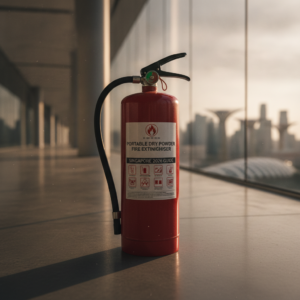
If an extinguisher shows these defects, replacement is safer and often more cost-effective than repeated repairs. For buying guidance on specific agents such as dry powder, local supply information is available: where to buy dry powder fire extinguisher.
Choosing a Singapore fire safety company: what to look for
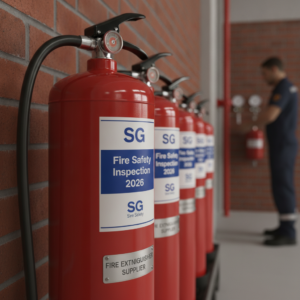
A reputable provider will also advise on asset replacement cycles and can perform full fire safety inspections to align with regulatory audits: fire safety inspection.
Costs and budgeting (2025 trends)
Costs depend on extinguisher type, number of units and the complexity of the site. Typical cost components:
– Monthly in-house checks: minimal staff time
– Annual professional service: per-unit labour and parts
– Recharge or refilling: depends on agent volume and type
– Hydrostatic testing: periodic and higher for high-pressure cylinders
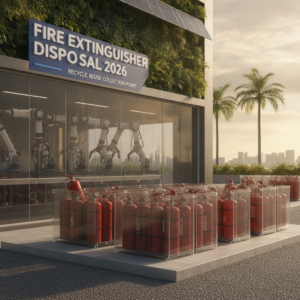
– Replacement: capital cost for new units and disposal of old cylinders
Plan maintenance into the operating budget; bulk servicing contracts with a Singapore fire safety company can reduce unit costs and ensure streamlined compliance.
New trends in extinguisher maintenance (2025)
- Digital service records and QR tags: Technicians now often attach QR-coded tags or NFC chips so building managers can view service history instantly.
- IoT-enabled cabinets and sensors: smart cabinets report if an extinguisher is removed or if internal pressure drifts, enabling faster response to tampering or faults.
- Eco-friendlier agents: demand for low-global-warming-potential extinguishing media is rising in specialised settings.
These trends make it easier for companies to maintain accurate, auditable records — and they are features to prioritise when choosing a Singapore fire safety company.
Practical on-site tips for facility managers
- Keep a central register of all extinuguishers with their locations, last service dates and next due dates.
- Train at least two staff members to perform monthly visual checks and basic familiarisation drills.
- Store service records digitally and back them up; this shortens audit time and demonstrates due diligence.
Replacement vs repair: an evidence-based decision matrix
Repair is appropriate when defects are minor, parts are straightforward to replace, and the cylinder passes pressure tests. Replace when the cylinder fails hydrostatic tests, shows deep corrosion, or when repair costs approach the price of a new unit. A trusted provider will give an honest cost-benefit analysis before recommending work.
For an accessible explanation of when to maintain or replace, a local resource walks through typical scenarios: maintain or replace fire extinguishers.
Training and drills: integrating extinguishers into your fire plan
Maintenance is only part of the picture. Regular hands-on training and evacuation drills ensure staff can find and operate extinguishers under stress. Consider short practical sessions with a certified trainer and document attendance as part of your safety records.
Final checklist before an inspection
- All extinguishers present at designated points and correctly mounted
- Current service tags visible and records available
- Monthly check logs completed and signed
- Clear signage and unobstructed access
- Up-to-date training records for responsible personnel
Closing: maintain readiness, reduce risk
In 2025, effective fire extinguisher maintenance in Singapore combines traditional hands-on servicing with modern digital workflows. Contact a certified provider to audit your current programme and set a clear maintenance roadmap to protect people and property.


No comment yet, add your voice below!