

Why fire extinguisher maintenance and timely replacement matter in Singapore
Fire extinguishers are frontline life-safety devices. In Singapore’s dense urban and commercial environment, well-maintained extinguishers reduce property loss and save lives.
This guide explains what good maintenance looks like in 2025, how to spot when replacement is needed, and practical steps for businesses and homeowners in Singapore.
Understand regulatory context and recommended practice
Responsible persons and building owners must ensure extinguishers are ready for immediate use and maintained by competent personnel. While exact servicing intervals can vary by extinguisher type and manufacturer, there are consistent expectations:
- Routine visual checks by the owner or on-site safety personnel.
- Proper record-keeping and visible service tags to demonstrate compliance.
Routine fire extinguisher maintenance checklist (what to do and when)
Consistent, documented maintenance prevents failure when an extinguisher is needed.
- Monthly visual inspections: Verify the pressure gauge is in the green, the safety pin and tamper seal are intact, no obvious corrosion or damage, and the unit is unobstructed and mounted correctly.
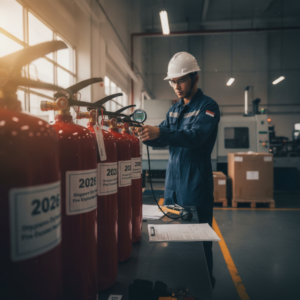
- Annual servicing: A qualified technician should perform a full functional check, internal examination where applicable, recharge if discharged, and replace worn or expired parts. Many organisations schedule annual servicing to coincide with other safety checks.
- Hydrostatic and pressure testing: Some extinguisher cylinders require hydrostatic testing at defined intervals. These intervals depend on extinguisher type and manufacturer guidance; consult the servicing technician and manufacturer documentation.
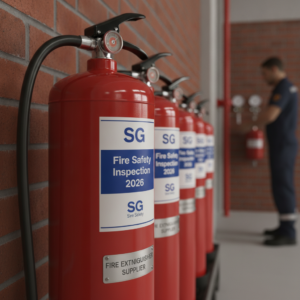
- Tagging and records: Affix a service tag after each maintenance activity and store digital records. Digital logs make audits and compliance reviews far easier.
Signs you need fire extinguisher replacement
Not every problem can be fixed with a simple service. Replace an extinguisher when you see any of the following:
- Physical damage: Dents, deep corrosion, broken handles, or compromised valves.
- Leaks: Any sign of leaking agent or pressure loss that cannot be rectified by recharging and testing.
- Failed pressure or hydrostatic tests: Cylinders that fail testing must be removed from service and replaced or retired.
- Expired or obsolete units: Some older extinguishers contain outdated agents or design features no longer recommended by manufacturers or regulators.
- Contamination or internal breakdown: If an extinguisher’s contents have degraded (caking in powder extinguishers, contamination in water-based units), replacement is safer than repair.
When uncertain, a licensed servicing contractor can advise whether servicing will restore reliability or replacement is the safer, more cost-effective option. For rules and practical advice about servicing and replacement procedures, see this fire extinguisher servicing and replacement resource.
Choosing the right replacement extinguisher for Singapore premises
Selecting a replacement is not only about matching weight and type — it’s about matching the extinguisher to the hazard:
- Class A (water or foam): Suitable for ordinary combustibles like wood and paper. Foam units add cooling and smothering for more serious risks.
- Class B (CO2, dry chemical): For flammable liquids common in kitchens, labs, and workshops. CO2 is clean and leaves no residue; dry chemical offers broad coverage.
- Class C (dry chemical): For electrical fires — the most common portable extinguisher requirement for offices and server rooms.
- Wet chemical: Designed for commercial kitchen grease fires (Class F). Essential in foodservice premises.
Consider agent performance, footprint, maintenance needs, and environmental impact. Newer low-GWP agents and clean-agent technologies are increasingly available for specialised risks, and they can reduce cleanup and downtime after use.
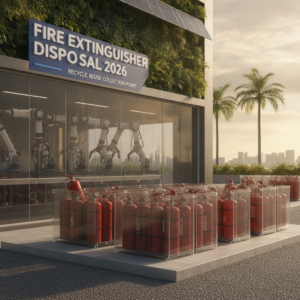
Disposal and end-of-life handling
Expired or condemned extinguishers must be disposed of safely to avoid environmental harm and ensure cylinders are not reused improperly. A licensed contractor can:
- Perform decommissioning and safe depressurisation.
- Recycle metallic components where facilities exist.
- Document disposal for compliance records.
Never attempt to puncture or crush a pressurised cylinder yourself.
Smart and digital trends in 2025 maintenance
Maintenance in 2025 increasingly uses digital tools to improve compliance and reduce costs:
- QR-code tags and cloud logs: Each extinguisher has a scannable tag linking to its service history, making monthly inspections and audits faster.
- IoT sensors: Tamper alarms and pressure-monitoring sensors report status in real time to facility managers.
- Centralised dashboards: Facilities with many extinguishers benefit from dashboards that flag overdue servicing or low-pressure units.
Cost considerations: service vs replacement
Balancing maintenance costs and replacement costs is a common challenge. Key points:
- Routine servicing is typically less expensive than replacement and extends service life when the cylinder and agent remain sound.
- Major failures (corrosion, failed hydrostatic tests) often justify replacement rather than repeated repairs.
- Vendor choice, contract scope, and digital add-ons (e.g., IoT sensors) affect total cost of ownership.
When budgeting, factor in servicing frequency, potential disposal fees, and possible downtime or productivity loss during replacement.
Selecting a competent service provider in Singapore
Choose a contractor with relevant experience, good references, and transparent documentation. Look for these features:
- Clear service schedules and digital records.
- Transparent pricing for routine maintenance, tests, and replacement units.
Practical maintenance plan and timeline for Singapore properties
A simple plan to keep extinguishers compliant and functional:
- Day 0: Conduct a full inventory and map extinguisher locations.
- Month 1: Train staff to do monthly visual checks and scanning of QR tags.
- Month 3: Schedule any priority servicing found from initial inspections.
- Annually: Full service and functional checks by a licensed technician; hydrostatic testing schedule reviewed.
- As needed: Replace units showing signs of damage, failed tests, or end-of-life.
Keep digital records accessible for audits and insurance claims.
Real-world scenarios and quick decision rules
- Office: If a CO2 unit shows pressure loss and corrosion, replace rather than risk a repair that may hide internal weakness.
- F&B kitchen: Replace expired wet-chemical extinguishers promptly; greasy environments accelerate agent degradation.
- Warehouse: High-risk storage may require more frequent inspections and a mix of Class A and B extinguishers.
If you’re unsure about the right action, a formal inspection will identify risks and recommend replacement or service.
Final thoughts: proactive care saves lives and money
Good fire extinguisher maintenance and timely fire extinguisher replacement are integral to any safety strategy in Singapore. Regular checks, clear documentation, and partnering with competent service providers reduce legal risk, improve safety outcomes, and can lower long-term costs.
Helpful links
- Servicing and replacement guidance: Fire extinguisher servicing replacement
- Full fire safety inspection services: Fire safety inspection
- Broader system maintenance guidance: Fire protection system and alarm maintenance
By committing to a clear maintenance routine and replacing units at the right time, organisations in Singapore can keep people safe and remain compliant in 2025 and beyond.


No comment yet, add your voice below!