

Why this checklist matters for Singapore premises
Fire extinguishers are frontline equipment for controlling small fires and protecting life and property. A well-managed replacement programme reduces downtime, limits liability during audits, and ensures occupants can rely on equipment when it matters.
Core principles: Replace when safety, not schedule, demands it
Routine servicing and visual checks are essential, but replacement decisions should be driven by condition and compliance. Replace an extinguisher when any of these apply:
- It has been discharged or partially used.
- The pressure gauge reads outside the normal range (for pressure-type extinguishers).
- There is visible corrosion, dents, deep rust, or structural cracks on the cylinder.
- The nozzle, hose or valve is damaged, blocked or missing.
- Safety seals or tamper indicators are broken and cannot be verified.
- The extinguisher fails a professional inspection or hydrostatic test.
- The extinguisher is beyond its manufacturer’s service life or marked expiration.
- It is the wrong type or capacity for the hazard after a change in operations or layout.
Use replacement rather than repair when repairs would reduce reliability, certification cannot be restored, or the cost of repair approaches replacement cost.
Monthly and annual checks: what to do and record
- Monthly/weekly visual checks (by trained on-site personnel)
- Confirm extinguisher is in its designated location, visible and unobstructed.
- Check the pressure gauge (green zone) where fitted.
- Ensure tamper seal is intact and the pin is present.
- Inspect for physical damage, corrosion or leakage.
- Verify operating instructions and signage are legible.
-
Note the last service date on the tag.
-
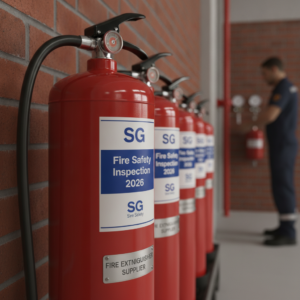
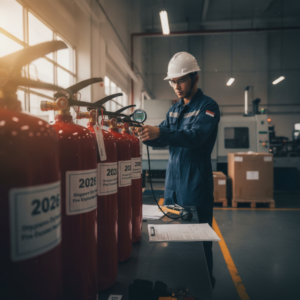
Annual professional inspection and maintenance (by TUV SUD PSB approved/registered service provider)
- Full functional check and servicing to manufacturer standards.
- Replace and certify parts only with approved components.
- Issue a service label or tag and update your maintenance log.
Keeping a digital log of these checks (date, findings, photo, technician name) helps with audits and trend analysis.
compliance essentials to include before replacing
- Confirm the extinguisher type matches the hazard class of the protected area. Different hazards need different agents (water, foam, CO2, dry powder, wet chemical).
- Check for manufacturer expiry and any statutory testing intervals (e.g., hydrostatic tests) — if overdue, plan replacement or testing immediately.
- Maintain records: purchase/installation date, service logs, replacement certificates and disposal records.
Practical replacement checklist (step-by-step)
- Identify the extinguisher’s location, type and last service date in your asset register.
- Perform a visual check and document condition with photos.
- If immediate risk indicators are present (leakage, pressure loss, damage), tag the unit “Out of Service” and cordon the area if necessary.
- Arrange for temporary coverage (additional portable extinguishers) while replacement units are procured and installed.
- For dry powder units and dedicated replacement services, consider specialists in fire extinguisher replacement.
- Update the maintenance log, update inspection tags, and securely store disposal documentation for the old unit.
Choosing the right type and capacity
Selecting the correct agent and size matters more than having the biggest cylinder. Common portable types and typical uses:
- Water: Class A fires (wood, paper) — not for electrical or grease fires.
- Foam: Class A and B (flammable liquids) — useful for spill-prone areas.
- CO2: Electrical and Class B fires — leaves no residue, ideal for electrical rooms and server cabinets.
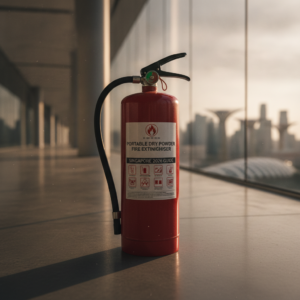
- Dry powder (ABC/BC): Versatile for multiple classes, common for general-purpose coverage.
- Wet chemical: Designed for kitchen grease fires (Class F)
Match extinguishers to the area’s hazards and occupancy. If building use changes (e.g., new machinery or commercial kitchen), review and possibly replace extinguishers to the appropriate type.
For supplier support and safe end-of-life handling, look into certified Singapore fire extinguisher supplier and safe disposal.
Safe disposal and environmental considerations
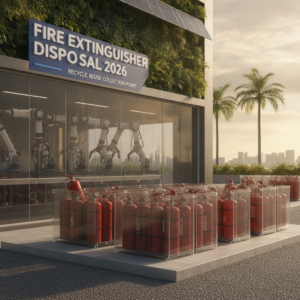
Fire extinguishers contain pressurised agents and sometimes chemicals that must be handled as controlled waste. Key disposal steps:
- Use a certified disposal service to depressurise and recover or neutralise agent safely.
- Keep disposal records — this can be important for audits and environmental compliance.
- Consider replacements with lower environmental impact where suitable (for example, CO2 alternatives for certain applications).
Suppliers who provide both replacement and responsible disposal services will simplify compliance and documentation.
Integration with building systems and recent trends
Modern fire safety maintenance increasingly links portable extinguisher management with broader systems and data:
- QR-code or NFC tagging on each extinguisher lets inspectors log checks with a smartphone, creating timestamped records and photos.
- Cloud-based maintenance logs and automated reminders for inspections and replacement windows.
- Asset-management integrations that map extinguisher locations to floor plans for faster servicing and audit reporting.
- Predictive maintenance models using inspection trends (corrosion rate, failed seals) to prioritise replacement before failures occur.
Linking portable extinguisher management to wider systems such as fire detection and suppression maintenance ensures cohesive compliance — see integrated options for fire safety inspection and protection system.
When professional testing and hydrostatic checks matter
Some extinguishers (pressure vessels like CO2 and certain gas cylinders) require periodic hydrostatic testing to verify cylinder integrity. If an extinguisher fails this test, it must be taken out of service and replaced.
If your facility has an integrated life-safety programme, coordinate extinguisher replacements with other service events such as fire alarm servicing to minimise disruption. Many providers offer bundled maintenance — for example, combined fire alarm maintenance and portable extinguisher services.
Record-keeping and audit readiness
Your documentation should include:
- Asset register with make, model, type, capacity and installation date.
- Service and inspection logs with technician details and any corrective actions.
- Replacement certificates and disposal receipts for retired units.
- Training records for staff who perform visual checks and operate extinguishers.
Maintain both physical tags on extinguishers and a digital backup.
Cost considerations and budgeting for replacements
Budgeting for periodic replacement is predictable if you track asset age and inspection outcomes:
- Forecast replacements based on manufacturer life expectancy and inspection failure rates.
- Factor in disposal and certification costs, not just purchase price.
- Consider leasing or service contracts that include replacement, testing and documentation for predictable annual costs.
Working with reputable suppliers can lower total cost of ownership through longer-lasting units and better after-sales support — for sourcing and inspection services, consult experienced providers such as those offering fire extinguisher inspection and supply.
Final checklist: quick reference before approving replacement
- Has the extinguisher been used, damaged or failed inspection? If yes, replace.
- Is the extinguisher the correct type and capacity for the hazard? If not, replace with a suitable unit.
- Is the unit beyond manufacturer’s recommended service life or failed hydrostatic testing? Replace.
- Is disposal handled by a certified service, with records filed? Confirm before removal.
- Verify.
Establish a practical programme that combines simple on-site checks, scheduled professional servicing, and a trusted supply/disposal partner to keep your premises safe and audit-ready.
For supplier and disposal services, find tailored solutions at Singapore fire extinguisher supplier and safe disposal.
For comprehensive replacement of dry powder units and specialist advice, see fire extinguisher replacement.
For inspection and integrated maintenance options, explore fire extinguisher inspection and linked fire alarm maintenance.
To align extinguisher replacement within a broader compliance programme, review solutions for fire safety inspection and protection system.
Consistent maintenance and timely replacement keep people safe and buildings compliant.


No comment yet, add your voice below!