

Why portable fire extinguishers still matter in 2025
Portable fire extinguishers are a frontline defence in homes, workplaces and public buildings. In Singapore’s dense urban environment, early response can prevent small incidents from becoming major fires. The Singapore Civil Defence Force (SCDF) continues to emphasise practical readiness: the right extinguisher, installed and maintained correctly, plus trained users, reduces damage and saves lives.
This article gathers up-to-date SCDF fire safety guidance and practical tips for selecting, placing, inspecting and using portable fire extinguishers in Singapore for 2025. It also highlights recent trends—digital inspection tools and remote monitoring—that are improving compliance and readiness.
Understanding extinguisher types and what SCDF recommends
Not all extinguishers are created equal. Choosing the correct portable fire extinguisher for the hazard is the first step in SCDF fire safety.
- Water: Effective on Class A fires (paper, wood, textiles). Not for electrical fires or oil/fat fires. In Singapore’s humid climate, sealed units with corrosion-resistant components are recommended.
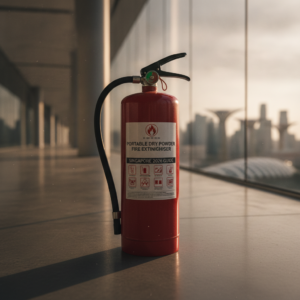
- Dry powder (ABC): Versatile and common for mixed risks (A, B, C). Good for general-purpose coverage in offices and vehicles, but can create a mess and obscure visibility.
- CO2: Clean agent for electrical equipment and data centres. Leaves no residue but has limited range and lower cooling effect.
- Clean agents/foam: Foam is suited to liquid (Class B) fires; clean agents are useful where residue must be minimised.
Check labels for the fire class symbols and consult SCDF guidance when matching extinguisher types to specific environments such as kitchens, workshops, server rooms or public foyers.
Correct sizing and placement for Singapore spaces
SCDF fire safety emphasises appropriate sizing and strategic placement:
- Coverage: Ensure each extinguisher’s rated capacity covers the area where it’s installed. High-risk zones (kitchens, plant rooms) often need larger units or multiple devices.
- Mounting: Mount extinguishers at an accessible height—handles should be within easy reach for most adults and not blocked by furniture or storage.
- Visibility: Keep extinguishers visible and signposted. Use reflective signage in corridors and stairwells so devices can be located quickly during low-light conditions.
- Multiple floors: All floors in commercial and multi-storey residential buildings should have their own extinguisher provisions, placed near exits and common corridors.
For a structured checklist tailored to SCDF standards, use the portable fire extinguisher checklist to confirm placement and type against local requirements.
Routine checks every user and owner should do
Daily and monthly visual checks catch many problems before they escalate:
- Accessibility: Is the extinguisher unobstructed?
- Pressure gauge: Does the needle show operational pressure?
- Physical condition: Any dents, corrosion, nozzle blockage, or tamper seal loss?
- Date tags: Is the last service date within the required interval?
- Instruction labels: Are operating instructions legible?
Document monthly checks and keep records for inspections. Singapore workplaces are expected to maintain evidence of maintenance and checks for compliance.
Servicing, testing and legal compliance
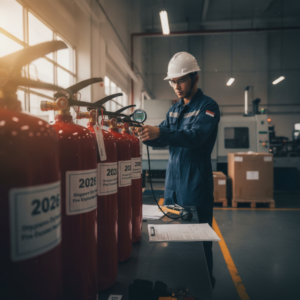
Annual servicing by an authorised technician is central to SCDF fire safety. Annual checks typically include recharge, seal replacement, pressure tests and performance verification. Some older or pressure-demand cylinders require hydrostatic testing at specified intervals.
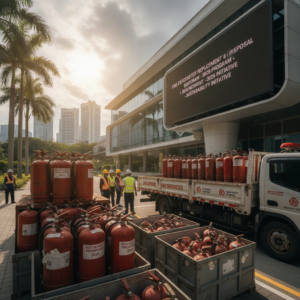
Engage licensed providers that understand local regulations and can issue proper service tags and documentation. For guidance on authorised maintenance and replacement options in Singapore, consult resources about fire extinguisher servicing & replacement.
Digital trends: many service providers now attach QR-coded tags that link to digital service histories and reminders—helpful for building managers tracking multiple units.
Using an extinguisher safely: the PASS method
When a small fire occurs and it’s safe to tackle, use a simple method taught by SCDF-aligned trainers:
- Pull the pin.
- Aim at the base of the fire.
- Squeeze the handle steadily.
- Sweep from side to side until the fire is out.
Always back away if the fire grows or conditions worsen. Never fight a fire if you’re alone in a room with no escape path.
Training and drills: building occupant readiness
Training is essential. Regular hands-on training sessions and fire drills familiarise occupants with extinguisher operation and evacuation routes. For companies and facility managers, keep a training log and rotate participants to build broad readiness across teams.
Combine instructor-led sessions with e-learning modules and short refresher drills. Many organisations include extinguisher demonstrations during annual fire safety briefings.
Maintenance of related systems
Portable extinguishers are one piece of the safety puzzle. SCDF fire safety also covers detection and suppression systems. Coordinated maintenance ensures alarms, sprinklers and extinguishers work together during an incident. For integrated programs and service packages, explore options for fire protection system and alarm maintenance.
Trends shaping extinguisher safety in 2025
Singapore’s fire safety ecosystem is increasingly tech-enabled:
- IoT monitoring: Sensors report tamper events, pressure drops and missed inspections to a central dashboard.
- QR and NFC tags: Instant access to servicing history and inspection date helps compliance audits.
- Predictive maintenance: Data analytics flag units at risk of failure before they lose effectiveness.
- Eco-friendly agents: Newer clean-agent technologies reduce environmental impact while maintaining suppression performance.
Facility owners should ask suppliers about digital-tracking options and compliance documentation when selecting service contracts. Service providers with digital capabilities can simplify adherence to SCDF requirements—see solutions for servicing for Singapore fire protection.
Common pitfalls and how to avoid them
Avoid these typical mistakes that undermine SCDF fire safety goals:
- Wrong extinguisher type near the hazard (e.g., water near electrical equipment).
- Poor visibility or blocked units.
- Lapsed servicing and undocumented checks.
- No training or staff unaware of extinguisher locations.
A straightforward mitigation plan: conduct a risk-based audit, prioritise high-risk zones, tag each unit with a service reminder, and schedule hands-on training for staff.
Special considerations for Singapore environments
Singapore’s tropical climate and urban density bring unique factors:
- Corrosion: Salt air in coastal areas accelerates corrosion—choose units with corrosion-resistant fittings and inspect more frequently.
- High-rise buildings: Evacuation priorities and stairwell access patterns must be considered when placing extinguishers.
- HDB and commercial premises: Different occupancy types have specific SCDF guidance—coordinate with property managers and licensed vendors for compliant installations.
If you manage multiple properties, consider an integrated maintenance contract that covers both fire alarm systems and portable units; many providers offer bundled services—see options for fire alarm maintenance & extinguisher replacement.
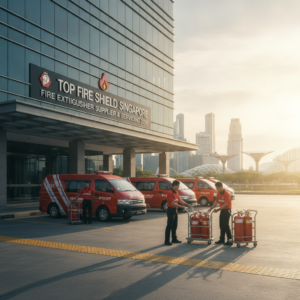
Choosing a competent service partner
Selecting the right vendor matters. Look for:
- Licenses and certifications from SCDF-recognised authorities.
- Clear documentation and service tags issued after each visit.
- Digital records and reminders for annual servicing.
- Transparent pricing and itemised quotes for replacements.
A professional partner will not only service extinguishers but also advise on appropriate device types, locations and signage. Many reputable suppliers provide combined packages that include alarm and protection system maintenance—learn more about bundled services for fire extinguisher servicing & replacement.
Quick checklist you can use today
- Confirm extinguisher type matches the hazard.
- Ensure visible signage and unobstructed access.
- Check pressure gauge and tamper seals monthly.
- Keep service records and book annual servicing with a licensed provider.
- Train occupants annually and run evacuation drills.
For a detailed downloadable checklist aligned to SCDF expectations, refer to the portable fire extinguisher checklist.
Closing: build a proactive fire safety routine
In 2025, SCDF fire safety for portable fire extinguishers combines tried-and-tested practices with modern digital tools. The fundamentals remain: correct selection, strategic placement, regular inspection, professional servicing and user training. Building managers and homeowners in Singapore should adopt a proactive routine—documented checks, reliable service partners and training—to ensure extinguishers do their job when needed.
Take action now by auditing your premises, updating service records, and scheduling any outstanding maintenance to keep people and property protected in line with SCDF guidance.


No comment yet, add your voice below!